Contributor

Esther Marie

Mutant Communications
Subscribe to our newsletter
Thank you! Your submission has been received!
Oops! Something went wrong while submitting the form.


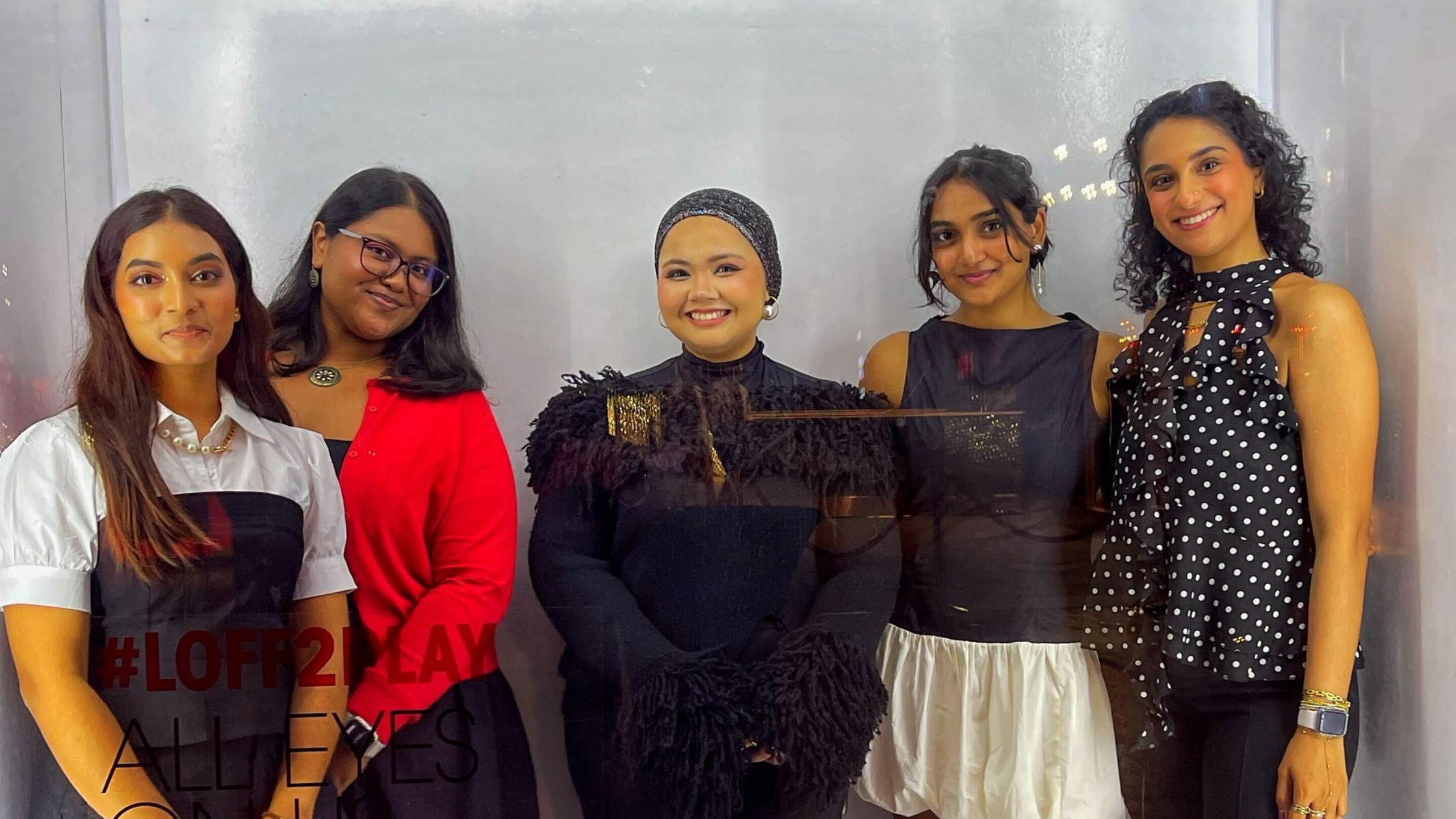
As artificial intelligence reshapes the communications industry, what role does human creativity still play?
This essay was submitted to the PRCA Future Leaders Award 2026. It examines why human judgement, cultural understanding, and creative instinct remain essential in an increasingly technology-driven world.
Esther Marie, Senior Manager at Mutant, offers her perspective on the question, "Is creativity at risk in a tech-obsessed communications world — and how can PR & Communications professionals in Asia-Pacific lead a new creative renaissance?"
I laughed when I first read this question. In the PR world, the debate around AI and creativity has been running long enough to feel almost passé. And yet, it hit home because it’s also a debate I’ve been having internally, one that I’ve only just recently resolved for myself.
Cards on the table: I have been very vocal about my views on AI. I’m deeply concerned about its ethical and sustainable implications, but I’m also a little bit afraid. Not that it’s going to rise up and wipe out the human race, but maybe a little bit of our humanity.
Would I become too reliant on it? Would I lose my own creativity? It’s a double-edged sword because to not use it in our industry would put me at a huge disadvantage.
Making my peace with AI required me to step back and consider how AI, in some form or other, has existed in our workspaces for years. And so it becomes a question of how we perceive AI and how we choose to use it.
In an industry where our value is often challenged by management and there is constant pressure to optimise resources, the question becomes: if we as PR professionals are going to simply repackage AI content and sell it as our own, why keep us?
At its core, PR has never been just about churning out ideas, but about judgement. The ability to understand context, form a point of view, and translate that into communication is what serves the client and resonates with audiences.
Which is why I believe the real impact of AI is often misunderstood. It is easy to say that AI threatens creativity – but I believe it more accurately threatens the thinking and judgment that creativity depends on.
There is a lifetime’s worth of nuance and skill built through even the most mundane tasks. When I look at the PR leaders who raised me (my “PR-rents”, if you will), I see a distinct edge to each of them that was hard-won through experience, trial and error, and an instinctive understanding of what is needed in the moment.
These are the moments where that judgment is formed. They teach us how to identify what matters, interrogate information, connect seemingly unrelated ideas, and develop a perspective that actually says something new.
Sure, AI can summarise an article in three seconds. While that’s great for speeding up our work, the sad consequence is PR professionals who are unable to tell you anything beyond that summary. They haven’t had to sit with the material long enough to form their own take on it.
It’s not about speed itself, but what we lose in the process. When we stop engaging deeply with information, we stop interpreting it and making sense of it for ourselves. Without that, it becomes much harder to form a genuine point of view – and without a point of view, creativity has no real basis.
That is how AI threatens creativity. Because if everyone is going to the same source for ideas, eventually they all begin to look and sound the same. Brand voices blur into each other. We start seeing the same formats, tones, and structures recycled repeatedly. The creativity (if we can still call it that) is no longer distinct.
This is a region where an over-reliance on AI can very quickly fall flat, because it lacks the nuance, culture, and context of our multi-cultural region. With some of the highest mobile and social media adoption rates in the world, audiences are not only diverse, but also highly attuned to authenticity and locality.
Which is why an over-reliance on AI is particularly dangerous. We risk whitewashing messaging or missing important nuances that matter to local audiences.
A prime example of this was the backlash surrounding the UNIQLO Malaysia x Oriental Kopi collaboration late last year, when netizens quickly became upset after realising the artwork was AI-generated. The final sentiment became overwhelmingly negative, with public criticism centred around the AI-generated flaws, poor quality of the visuals, and the perceived “cheapness” in neglecting local artists.
What upset people wasn’t merely the use of AI, but the feeling that something deeply local and cultural had been stripped of care and authenticity.
Ironically, I don’t think the answer is rejecting AI altogether. Administrative work has always been one of the biggest creativity killers in our industry. Reporting, summaries, transcriptions, formatting decks, pulling coverage and cleaning up notes – these are all areas where AI can and should help us.
But the purpose of that efficiency should not be to push us into working at an even greater speed and volume. It should be to give us back time to think.
As leaders, we need to stop measuring success purely by output and deliverables. We should be asking harder questions about the quality of the work itself. Was it original? Did it resonate? Did it feel culturally relevant? Did it make people stop scrolling? Did it make them feel something? Because if AI can help us take care of the mechanics of our work, then our value as PR professionals lies in the judgement that we bring to what deserves to be said, how to say it, and why anyone should care in the first place.
It also means creating environments where younger teams are encouraged to think beyond the first AI-generated answer. To question, to challenge, and to form perspectives – developing their own instinct rather than just speed.
For PR to stay relevant, it has to stay human first.
So maybe the goal isn’t to fight AI, but to rebalance how we work alongside it, allowing it to handle mechanics while we create work that feels thoughtful and unmistakably human.
Because the real creative renaissance won’t be driven by machines; it will come from people who finally have the time to think again.

.jpg)




.jpg)
.jpg)
.jpg)

.jpg)
%20(1).jpg)