Contributor
No items found.



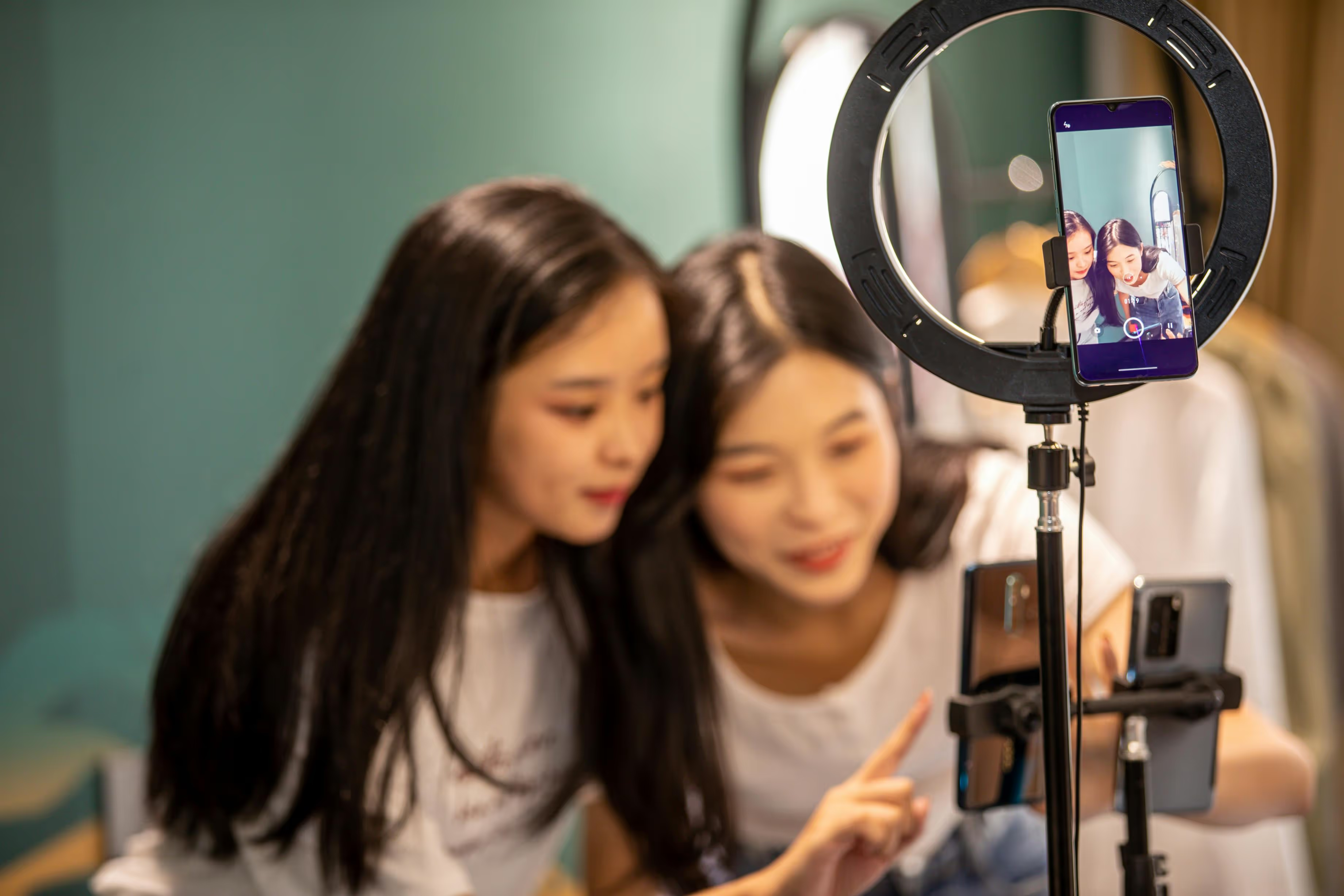
When it comes to influencer marketing, bigger isn’t always better.
Here’s proof: Thailand's influencer marketing landscape is going through a glow-up, and it's not the mega-influencers or celebrities driving it. Brands from McDonald's to Unilever are increasingly placing their bets on micro-creators—influencers with 10,000 to 100,000 followers who deliver something larger profiles often can't: authentic engagement with niche audiences that actually converts.
The numbers back this up. Micro-influencers in Thailand get engagement rates 4 to 6 times higher than their macro counterparts, cost way less than celebrity partnerships (typically THB 2,000 to THB 7,500 per post), and connect with communities through real relationships instead of polished ads. But what's driving this shift isn't just better numbers—it's how brands are using these smaller creators to pull off things traditional influencer strategies just couldn't do.
Thailand ranks among Southeast Asia's fastest-growing markets for influencer marketing, with spending reaching THB 2 billion in 2020 and growing 30% year over year. But growth alone doesn't explain why micro-influencer trends in Thailand are moving faster than the broader industry.
The shift comes down to platform algorithms increasingly favouring smaller creators over traditional celebrities, mixed with Thai consumers' push for authenticity. In Thailand, 92% of consumers rely on influencer advice for buying decisions—the highest rate in Southeast Asia—but their trust lands on creators who feel accessible instead of aspirational. This creates perfect conditions for micro-creators who keep closer relationships with their followers and work within specific interest communities.
What makes Thailand stand out is how fast brands adapted their strategies to match this shift. Instead of just swapping macro-influencers for micro-creators at a lower cost, leading brands are redesigning campaigns around what micro-creators do differently: reaching niche audiences that broader campaigns often miss.
McDonald's Thailand collaborated with food-and-beverage micro-creators rather than general lifestyle influencers, using Thailand's unique menu items as natural content hooks for both Thai and international food creators.
Their TikTok soft serve campaign in 2022 shows this perfectly: when Indonesian customers started smashing multiple soft serves into bowls, McDonald's Thailand worked with local creators to boost user-generated content through Spark Ads, created a new menu item for the trend, and even provided bowls in-store. Thai-specific items like Mc Krapao Mu (spicy basil pork), McKao Mun Kai (chicken rice), and Thai Green Curry items pull in both local and international food bloggers who naturally create content around Thailand's unique McDonald's menu.
Key Insights:
Chaosua Rice Crackers used local micro-influencers for TikTok livestream shopping events, turning live commerce into actual sales in Thailand's fast-growing social commerce scene.
The campaign pulled in 892,000 views and 17,000 product orders by working with micro-creators who have already built trust with their audiences.
Insights:
AirAsia Thailand shows how service brands can use micro-creators beyond just product promotion, tapping lifestyle and travel influencers to explain complex travel services.
The airline works with micro-creators like @bozovc (a lifestyle influencer with a big Thai following) to promote services like their Fly-Thru connections and guarantee programme. They've got a dual strategy going: local creators explain service features while international travel influencers showcase Thailand as a destination, hitting both domestic Thai travellers and inbound tourists. The bigger picture includes their "Go Somewhere Different" campaign with travel creator Devin Halbal (@kudasai.co, 960K+ TikTok followers), backed by networks of smaller travel micro-creators.
Insights:
Skintific's rise in Thailand shows how beauty brands can own social commerce through effective micro-creator partnerships rather than big celebrity endorsements.
The Indonesian skincare brand launched in Southeast Asia in 2021 and became TikTok Shop's sales champion by building campaigns around authentic beauty influencers. Skintific's Thailand game plan focused on partnering with beauty micro-creators (10,000 to 100,000 followers) who do skincare routines, product reviews, and tutorials. Instead of scripted ads, they got creators to share honest testimonials and show real product usage.
Notable Thai beauty micro-creators include @thebestory (interior architecture and K-beauty content), @bxxm_beauty (beauty tips and product reviews), and @ms.xple (fashion and beauty with brand partnerships), plus loads of creators using #skintificth for skincare demos.
They seeded products to creators who made authentic content, then ran TikTok Live shopping events where micro-creators showed products in real time, answered questions, and dropped limited-time promos.
Insights:
Precision beats reach: Micro-creators work best when you match them to niche audience segments instead of using them for broad awareness.
Live and interactive formats multiply impact: Chaosua's livestream didn't just rack up views; it pulled in 17,000 orders because the format lets people engage directly and buy on the spot.
Scale needs a proper system: Careful curation, content management, and performance tracking matter.
Real stories drive trust and sales: Authenticity beats production value in Thailand's social commerce world.
What won’t you find in these case studies? Evidence that micro-creators work just because they're cheaper. Sure, cost matters, but these campaigns work because micro-creators provide access to specific communities, deliver authentic content that drives purchases, and achieve engagement rates that turn into actual sales.
Micro-creator strategies require different skills: spotting relevant creator communities, managing relationships with dozens (or even hundreds or thousands) of individual creators at once, tracking performance across platforms, and blending creator content with paid media and owned channels.
The brands getting this right aren't treating micro-creators as a cheap alternative to macro-influencers. They're treating them as a completely different channel that needs a different strategy, management, and measurement.
Our PR agency in Thailand understands that regional marketing with micro-influencers requires balance. We work with brands to identify the right creator partnerships, build campaigns that actually convert, and measure what matters beyond vanity metrics. If you're looking to tap into Thailand's creator economy or scale your regional marketing across Southeast Asia, let's talk.




.jpg)








.jpg)
.jpg)
%20(1).jpg)
.jpg)

.jpg)
.avif)

























.avif)




.jpg)




.avif)


.jpg)