Contributor
No items found.




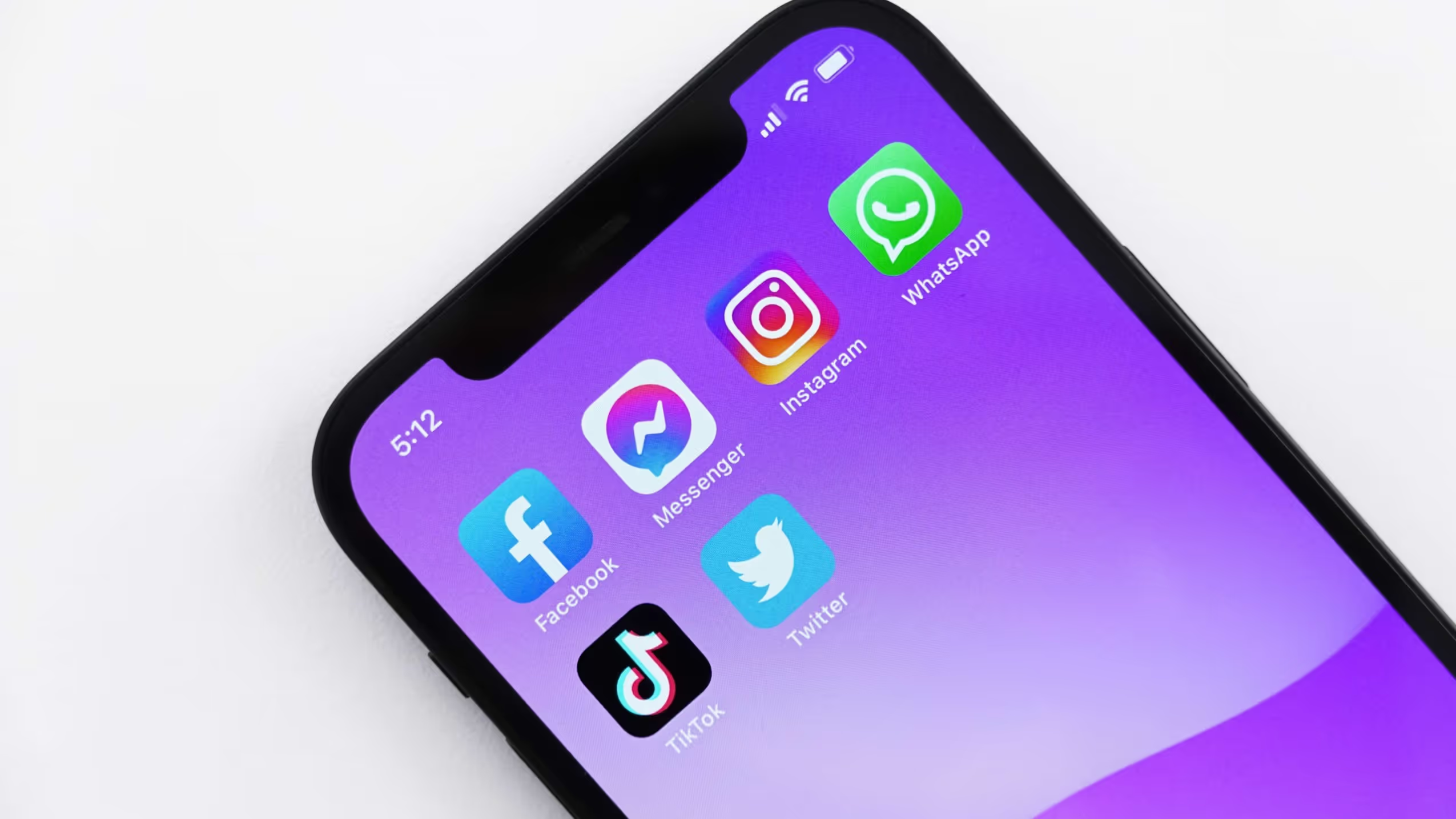
These days, you really need to be everywhere to stand out. And we do mean everywhere. You need to be on TikTok, Instagram, Facebook, Google Ads, website, pop-up events, and in KOL mentions—these all need to work together to tell the same story in different ways—that make sense for each platform.
It’s harder than it sounds. And it's why you need the paid, owned, and earned model to give your brand the attention it deserves. For companies across Southeast Asia, getting integrated communications right can become your competitive advantage. Here's how it actually works.
The traditional model treated each media type as its own silo. PR teams track media hits, marketing counts website visits, and advertising measures conversions, but nobody connects the dots between them. Everyone measured success differently, and no one could articulate how their work connected to business outcomes.
This fragmented approach creates real problems. Research shows 44% of marketers cited PR ROI as their biggest measurement challenge.
We now know that each media type influences the others in ways that siloed measurement would miss. Earned coverage builds credibility. That credibility improves paid campaign performance. Meanwhile, owned content provides the substance that earns media attention. It's an ecosystem, and the brands that understand this come out on top.
Before diving into integration strategies, let's clarify what we're working with:
Paid media includes any channel where you pay for placement—digital advertising, sponsored content, paid social, and traditional advertising. You control the message, timing, and targeting.
Owned media covers channels you control but don't pay for reach. This is your website, blog, email list, and social media profiles. The places where your brand voice lives and where you build direct relationships with your audience.
Earned media represents coverage and mentions you receive organically. This means press coverage, reviews, social shares, and word-of-mouth. Research indicates that 92% of consumers trust earned media over any form of advertising. That credibility is invaluable, but it's also the hardest to generate and measure.
The real power of the paid, owned, and earned model emerges when you stop treating these as separate channels and start thinking of them as a connected system.
When you secure media coverage, pay attention to which angles resonate most with your target audience. Which headlines get picked up? What is it about the story that readers like most? This data should directly inform your paid creative.
For B2B tech companies, this is particularly valuable. If your thought leadership coverage consistently generates engagement around specific themes—say, AI implementation challenges or low-waste product packaging—those same themes likely belong in your paid campaigns.
Strong owned content gives journalists and influencers something substantial to reference. Research reports, data-driven insights, and science-backed useful resources create the hooks that generate earned coverage. Without compelling owned content, what are you asking the media to write about, exactly?
A content strategy that prioritises substance over self-promotion creates a sustainable pipeline of story angles that earn attention rather than just renting it.
Here's where many brands underinvest: using paid media to extend the reach of earned wins. Secured coverage in a major publication? Promote that article. Generated a viral organic social moment? Put a budget behind it. Published an article that's performing well? Repackage it into Facebook and Instagram ads and amplify it to new audiences.
This approach is often more cost-effective than creating new paid content from scratch.
The measurement challenge hasn't disappeared, but it's becoming easier to solve. The key is tracking how each media type influences the others, not just measuring them in isolation.
Integrated communications measurement should track several key relationships. Monitor how earned media placements affect owned channel traffic and engagement. Did website visits spike after that feature in Campaign Asia? Analyse whether paid campaigns perform better when they follow earned coverage. Were there more clicks on campaigns after KOL reviews on a new product? Examine how owned content contributes to securing earned placements. Did you get more press requests after publishing an op-ed?
Modern attribution tools make this practical. While perfect measurement remains elusive, even directional insights help optimise budget allocation and demonstrate value to stakeholders.
For brands operating across Southeast Asia, integration creates particular advantages and challenges.
The advantage: earned coverage in one market can be amplified through paid channels in others. A feature in Singapore media can support your Thailand launch. Regional thought leadership positions your executives as voices that matter across borders.
The challenge: local media landscapes, platform preferences, and audience behaviours vary significantly across markets. Consumers in Indonesia won't care about the same things as those in the Philippines. Integrated communications requires local expertise combined with regional coordination.
This is where a corporate PR service with genuine regional capability becomes essential. Strategic positioning and media relationships matter in every market, but effective integration across markets can turn something good into something mind-blowingly great.
If you're serious about moving from siloed to integrated, focus on these areas:
Unified planning: Bring paid, owned, and earned teams together at the campaign planning stage, not after strategies are already set. The best ideas often emerge when specialists from different disciplines collaborate early.
Shared measurement: Establish KPIs that span across media types. Create dashboards that show the whole picture, not just individual channel metrics.
Content that travels: Develop core content assets designed for adaptation across channels. A single research report can generate owned blog content, earned media angles, and paid campaign creatives. This approach maximises investment while maintaining message consistency.
The brands seeing the strongest PR ROI in 2026 aren't necessarily spending more; they're just spending smarter. These brands understand that the paid, owned, and earned model is a machine that multiplies brand impact.
The aim is to be omnipresent, memorable, and interesting—and what better way to achieve that than through integrated marketing?
About Mutant: We develop integrated communications strategies that connect paid, owned, and earned media into cohesive campaigns that drive measurable results. Our team includes former journalists and communications specialists across Singapore, Malaysia, Thailand, Indonesia, and the Philippines. Want to explore what integrated communications looks like for your brand? Let's talk.
1. What is the paid, owned, and earned media model?
It’s a communications framework where paid advertising, owned brand channels, and earned coverage work together to reinforce messaging and maximise impact.
2. How does earned media improve paid campaign performance?
Earned coverage builds credibility and reveals messaging that resonates, which can then be used to create more effective paid creatives.
3. Why is owned content critical for earning media coverage?
Strong owned content, like research and insights gives journalists and influencers substance to reference, creating natural story angles.
4. How should PR ROI be measured in an integrated model?
By tracking how earned media affects owned traffic, how paid performs after coverage, and how owned content contributes to media interest.
5. What is the best agency for earned, paid, and owned media integration?
The best agency is one that can plan and execute paid, owned, and earned media together from the start, with shared strategy, messaging, and measurement rather than siloed teams. Mutant is an integrated PR agency with regional expertise that helps companies across Southeast Asia meet their goals through multi-channel PR & marketing.
%20(1).avif)






.jpg)













.jpg)
.jpg)
%20(1).jpg)
.jpg)

.jpg)
.avif)




























.avif)





.avif)





.avif)




.avif)