Contributor

Via Bernas

Mutant Communications
Subscribe to our newsletter
Thank you! Your submission has been received!
Oops! Something went wrong while submitting the form.


.jpg)
One glitch, one tone-deaf post, one poorly worded update, and suddenly it is not a product issue anymore; it is a public moment.
Screens light up, screenshots spread, and a brand that was invisible five minutes ago is now everywhere for the wrong reasons. In the Philippines’ highly networked, socially driven digital landscape, narratives do not just travel; they escalate.
That is why a single unfavourable incident can quickly spiral, making timely, culturally attuned, and transparent responses critical to protecting brand reputation.
Why Public Apologies Matter and How Filipino Audiences Perceive Them
A 2024 study found that because negative brand perceptions can spread quickly through social networks and online communities, Filipinos now place greater emphasis on service quality and overall experience than on price, with both strongly shaping brand reputation and customer experience.
Public apologies resonate more when they:
Filipino cultural values further shape these expectations:
This dynamic extends into the digital space, a phenomenon often referred to locally as “Digital Bayanihan,” inspired by the Filipino tradition of community spirit and mutual aid. Online, communities quickly rally around issues—critiquing and defending brands, or amplifying shared experiences. These dynamics mean public sentiment can form and shift rapidly.
In this context, a well-timed, transparent, and culturally attuned apology does more than address the issue—it re-engages the community, demonstrates accountability, and helps steer the conversation toward trust and reconciliation.
Localising Apology Strategies for the Philippine Market
Addressing a public apology in the Philippines requires aligning with how audiences interpret, feel, and respond, considering the environment they co-create through constant social and digital interaction.
Below are four strategic considerations:
Speed signals accountability in a real-time market, showing the brand is listening before sentiment hardens. However, rushing without clarity can backfire. Brands should always prepare response frameworks, verify key details quickly, and align messaging internally to ensure statements are both timely and accurate.
Filipino audiences are highly sensitive to tone. Corporate or legalistic apologies can feel distant, while humble, empathetic language that acknowledges real impact resonates more. Effective apologies directly recognise those affected, express genuine remorse, and communicate in a human, conversational way, showing that the brand truly understands the consequences of its actions.
A strong apology in the Philippines must go beyond words — audiences want to see visible steps that address the root issue and prevent recurrence. While not every crisis demands monetary compensation, clear corrective measures such as policy updates, staff retraining, operational improvements, or support for affected parties signal genuine accountability.
A clear example is the 2020 Plantation Bay Resort controversy in Cebu. A mother shared that staff repeatedly reprimanded her six-year-old son with autism for making noise at the pool. The resort’s initial response defended its policies and questioned the mother, triggering widespread public backlash. A subsequent apology acknowledged “poor handling,” but audiences highlighted the need for tangible corrective steps like staff training and policy revision to restore trust.
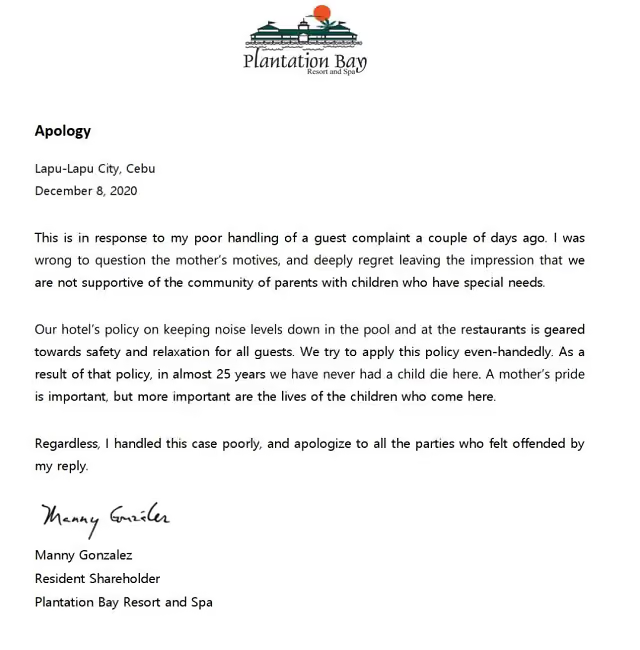
Source: Cebu resort apologises for ‘poor handling’ of complaint of guest with special needs
In a highly social and vocal market like the Philippines, conversations don’t end with the first apology. Audiences continue to engage across social media, forums, and community networks. The Plantation Bay case shows how an initial defensive response can keep a controversy alive. Even after a follow-up apology, public criticism persisted, and a shareholder eventually resigned. It’s a reminder that, beyond taking corrective action, brands need to stay culturally aware, responsive, and sensitive to the needs of their audience to rebuild trust and prevent further fallout.
Check Before You Post: Is Your Public Apology Ready to Go Live?
An apology is only as strong as the thought behind it—how well you anticipate reactions, understand your audience, and prepare for scrutiny before it goes live.
Before posting:
Filipinos have a high-context and relationship-driven culture where trust and respect are valued above all. When brands show genuine understanding of nuances and diverse values, own their mistakes, and follow through with meaningful action, it can mark the beginning of rebuilding lasting trust and stronger relationships.
Want to ensure your public apology resonates with Filipino audiences and protects your brand reputation? Mutant is a communications agency in the Philippines that helps global brands connect with local audiences. Send us a note: hello@mutant.com.ph
FAQS:
1. How can a brand know the right time to apologise?
Gauge public sentiment and urgency. Respond quickly enough to show you’re listening, but take a moment to verify facts and coordinate internally so your message is accurate and credible.
2. How can a brand sound sincere without losing professionalism?
Strike a balance between professionalism and empathy: acknowledge the real impact, express sincere remorse, and maintain a respectful tone without using overly formal or legalistic language.
3. Is monetary compensation always necessary?
Not all situations require monetary compensation. Corrective actions like policy updates, staff training, or support for affected parties often matter more.
4. How can brands handle ongoing online backlash?
Monitor conversations, respond thoughtfully, and adjust messaging as needed. Ongoing engagement shows commitment and prevents escalation.
%20(1).avif)









.jpg)
















.jpg)
%20(1).jpg)
.jpg)

.jpg)

.avif)





































.avif)






.avif)





.avif)




.avif)