Contributor
No items found.



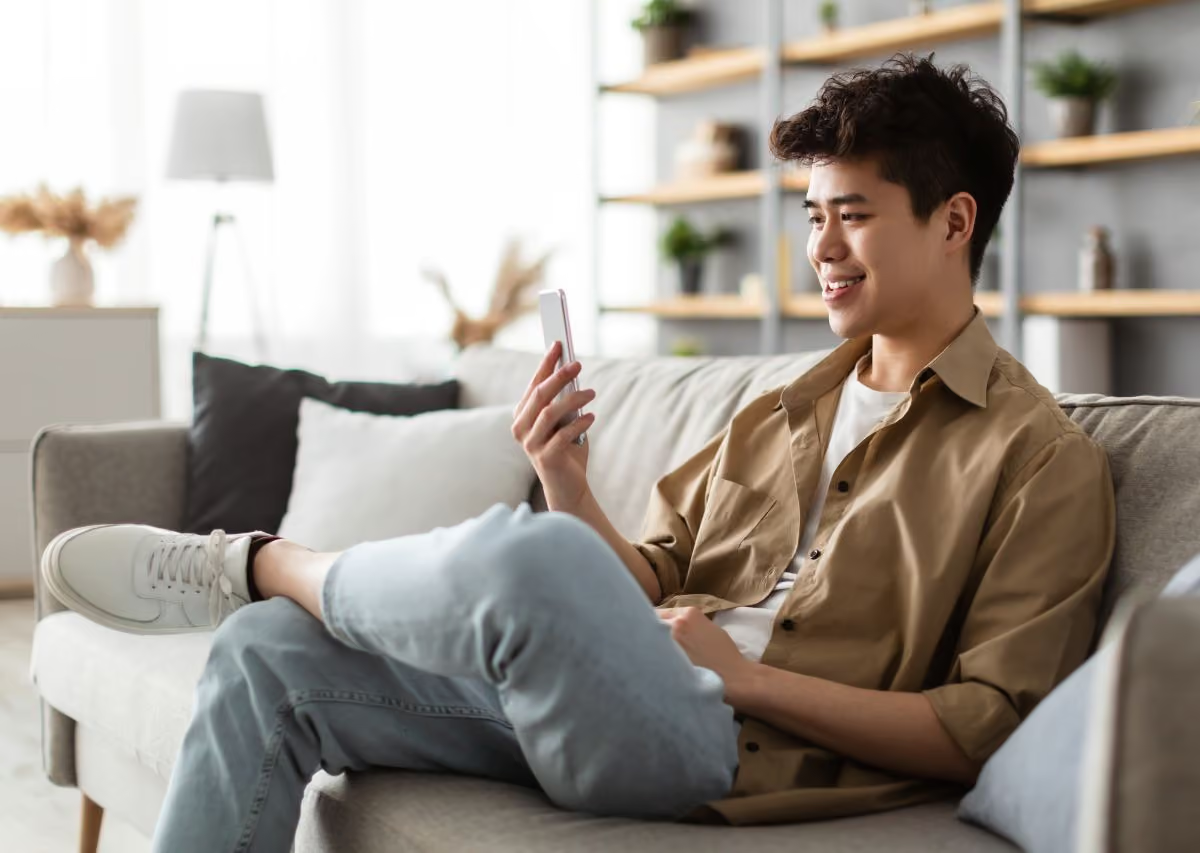
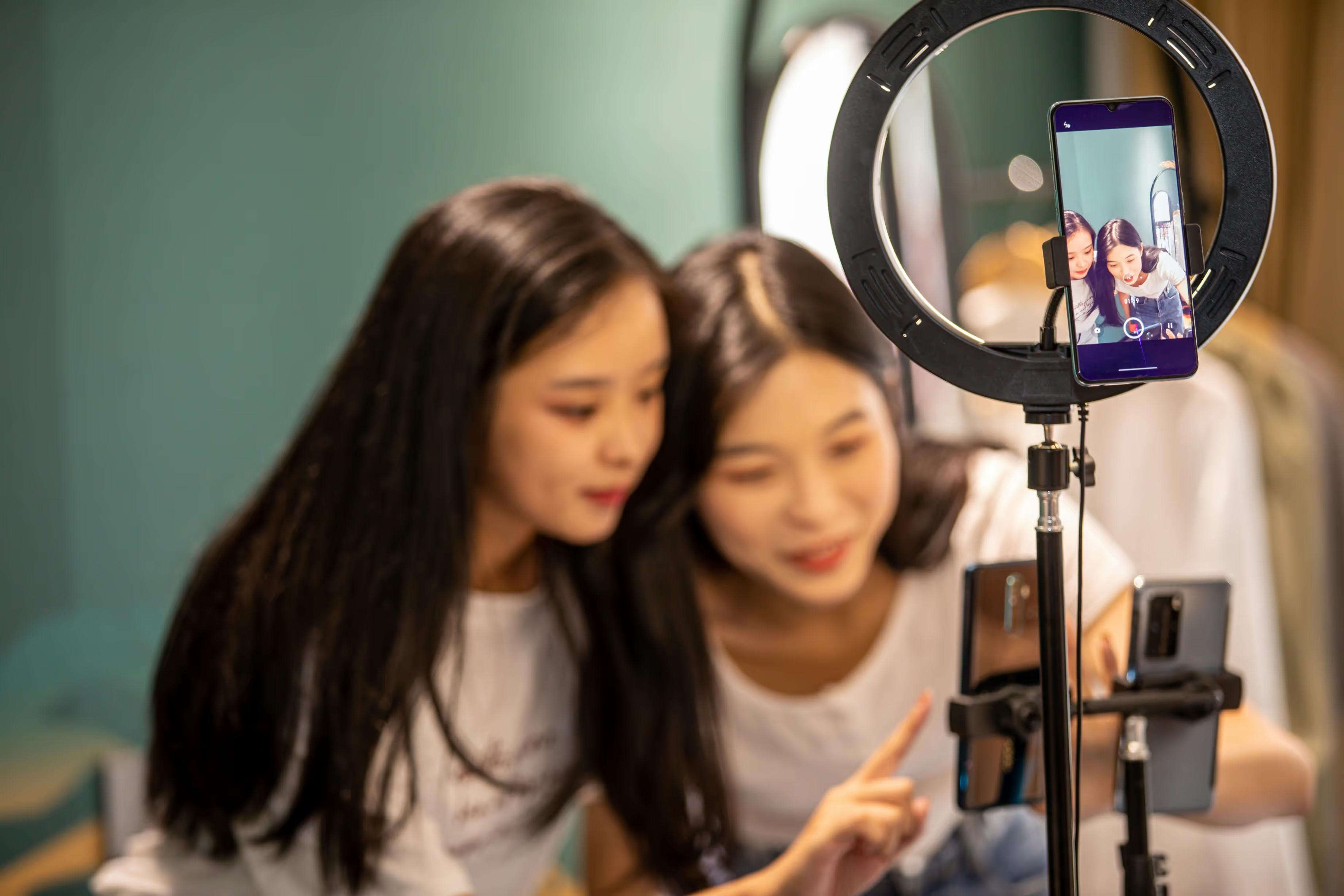
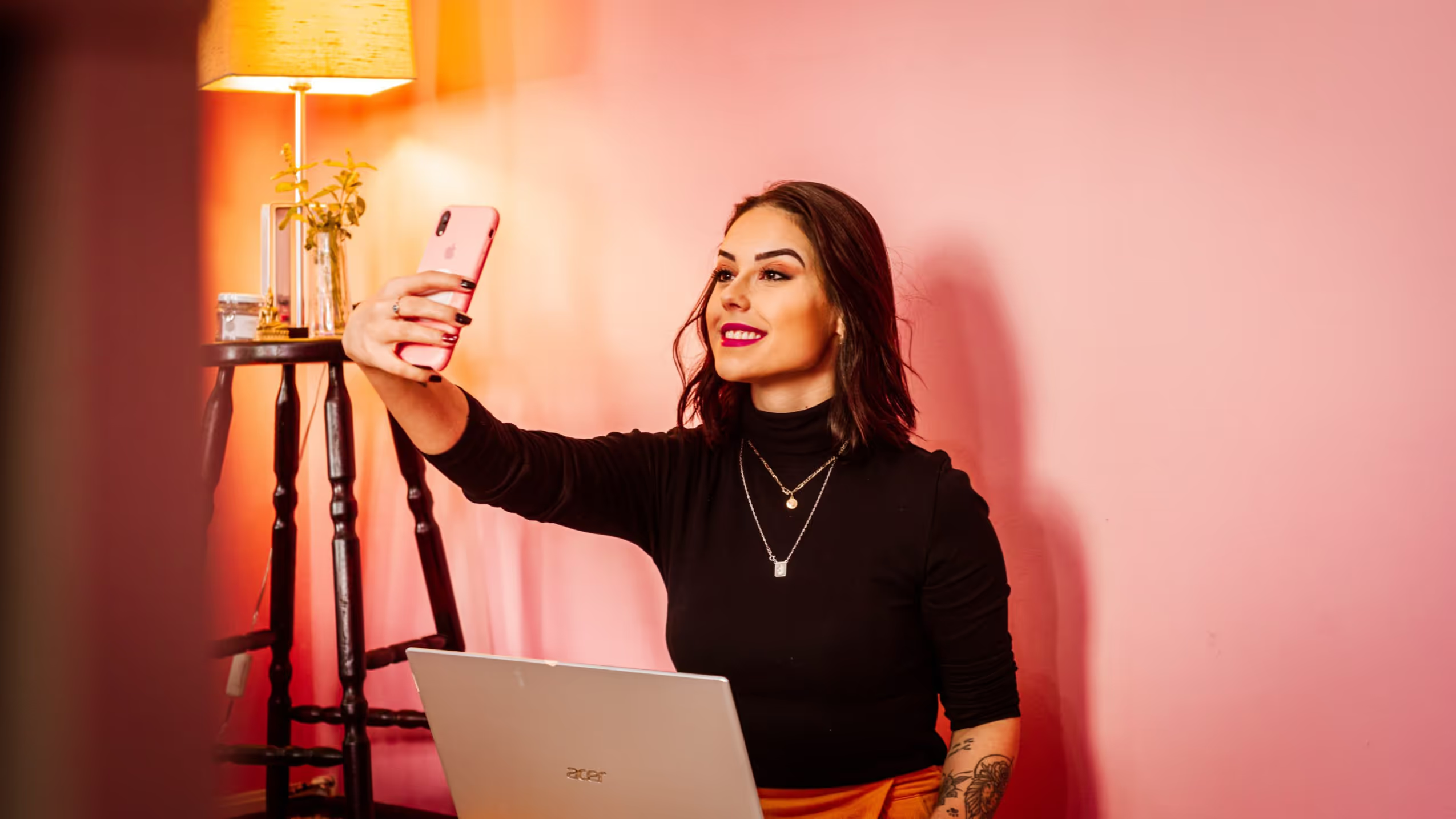
After decades of watching celebrities hold shampoo bottles with rehearsed smiles, it's safe to say Filipinos have grown tired of it. When a micro-influencer from Cebu posts her genuine hair struggles, shows her actual bathroom, and documents real results over three weeks? That stops the thumb. That builds trust and gets sales.
This distinction matters enormously in a culture that prioritises pakikisama—genuine harmony and connection. In the Philippines, the path to purchase doesn't start with a television commercial anymore. It starts with a recommendation from someone who feels like a friend. And that dynamic is exactly why influencer trust in the Philippines has become a significant force shaping consumer behaviour in the market today.
The Philippines isn't just a social media-heavy market. It has reigned as the social media capital of the world since 2015. Filipino users spend over four hours daily on platforms like Facebook, TikTok, Instagram, and YouTube, far above the global average. That volume of daily exposure means Filipinos have mastered the skill of filtering out noise. The data backs this up:
What's driving this? A word-of-mouth culture that runs deeper than marketing strategy.
KOL credibility in the Philippines doesn't operate the same way it does in Singapore, Indonesia, or Thailand. Several cultural factors make this market uniquely receptive to influencer-driven communication.
Filipinos gravitate towards people they perceive as genuine and approachable, not authority figures delivering polished messages. Influencers who share personal stories, speak in Taglish (a natural mix of Tagalog and English), and respond to comments like a friend earn a level of trust that no television spot can replicate.
Besides that, it’s important to note that Filipino consumers are fiercely communal in their purchasing decisions. Families consult each other before major buys. Friend groups share product recommendations over group chats. Social proof matters here more than almost anywhere else in the region. When an influencer's community rallies around a product, that momentum snowballs.
The Philippines also has a massive young, digitally native population. With a median age of around 26 years, it's one of the youngest in Southeast Asia. They've grown up consuming content from creators, not commercials. For this generation, an influencer's recommendation carries the same weight as advice from a close friend.
The theory is compelling. The results are even more so. Here are five campaigns that demonstrate exactly how influencer trust in the Philippines translates into measurable business outcomes.
Working with BBH Singapore, Jollibee launched the #JolliEverAfter Branded Hashtag Challenge on TikTok—nine sub-challenges that invited users to role-play romantic comedy moments, from confessing to a crush to creating their dream love story ending.
The campaign leaned entirely on user-generated content. No celebrity endorsers. No scripted ads. Just ordinary Filipinos playing out their own kilig (romantic excitement) stories with Jollibee as the backdrop.
Results:
Why it worked: Jollibee understood that Filipino audiences don't want to be marketed to—they want to participate. The campaign turned consumers into creators, and the brand became a vehicle for self-expression rather than a product to be sold.
Colourette's trajectory reads less like a business case study and more like a cultural shift. Founded in 2015 by Nina Ellaine Dizon @theninaellaine, the brand was built from day one around the idea of makeup "for Filipinos, by Filipinos", specifically addressing the long-standing gap in shades that actually suited morena skin tones.
Rather than investing heavily in traditional advertising, Colourette focused on creator-driven earned media Philippines strategies. Nina herself became the brand's primary influencer, building a massive TikTok following by sharing behind-the-scenes business content, empowerment messages, and unfiltered product demonstrations.
Results:
The Colourette Clique—a community of rising content creators selected through online auditions based on engagement and content quality rather than follower count—became a powerful engine for authentic product advocacy.
Why it worked: Colourette didn't hire influencers to promote a brand. The brand itself became an influencer, and its community became its marketing department. Filipino consumers responded because the advocacy felt earned, not bought.
GRWM (Get Ready With Me) Cosmetics is the creation of Mae Layug @maealayug, a former nurse turned YouTube content creator who launched the brand in 2019 with ₱2.5 million in personal savings. The brand's debut product, the Milk Tint, launched exclusively through TikTok influencer partnerships via @grwmcosmetics.
Layug partnered with beauty creators, including Norikuh, Kai Javier, and Killakushla, who received PR packages and produced their own authentic unboxing videos, swatch tests, and product reviews. Critically, the creators were given full creative freedom—no scripts, no mandatory talking points. The content felt native to each creator's personal style.
Results:
Why it worked: Layug understood her audience because she was one of them—a content creator speaking directly to a community she'd built over the years. The Milk Tints campaign succeeded because every piece of content was rooted in real experience, instead of scripted brand messaging.
In 2021, the footwear brand launched its Croctober Campaign featuring a Shopee livestream hosted by Shopee Idol Gem Miranda.
Unlike pre-recorded influencer content, live selling requires real-time trust. Viewers need to believe the host's enthusiasm is genuine, their product knowledge is real, and their recommendations are honest. Miranda brought all three, plus the interactive energy that keeps Filipino viewers engaged through extended livestream sessions.
Results:
Why it worked: Live commerce strips away the polish of traditional advertising. Filipino consumers watched a real person try on shoes, answer questions in real time, and give honest reactions.
Cornetto's #CONEfessions campaign tapped into something fundamentally Filipino: the culture of kilig—that heart-fluttering excitement around romantic moments. The brand partnered with heartthrobs Kyle Echarri and Joao Constancia on Twitter (now X), building an interactive narrative where the two sought advice on confessing to a crush.
What made this campaign distinct from a standard celebrity endorsement was its structure. Fans weren't passive spectators, but active contributors. They shared personal advice, wrote their own confession stories, and shaped the narrative's direction.
Results:
Why it worked: Cornetto recognised that Filipino audiences don't just consume content about romance—they live it. By making the audience co-creators of a love story, the brand turned a product campaign into a shared cultural experience.
Across all five campaigns, several patterns for successful earned media in the Philippines:
Globally, customers are preferring authenticity over polished corporate fluff (Read our in-depth blog on this topic: insert social reset 2026 blog url once published). Brands need to work extra hard to offer authentic, community-driven campaigns.
All it takes is a deeper understanding of your audience and how that aligns with your own brand values & DNA – a non-negotiable if you’re planning to enter the Filipino market.
Understanding this balance can become overwhelming. That’s where we come in. Mutant's team in the Philippines works with brands to identify the right creator partnerships, develop campaigns rooted in cultural insight, and measure what actually moves the needle.
As a lifestyle PR agency in the Philippines with deep regional expertise, we build earned media Philippines strategies that match creators to brands based on genuine audience alignment. From corporate communications services to employer branding, we offer end-to-end services for organic results. Curious? Drop a note to hello@mutant.co.ph and let’s start the conversation!
1. Why do Filipino consumers trust influencers more than traditional advertising?
Filipino culture places enormous value on personal recommendations and communal decision-making. Influencers function as trusted members of their audience's social circle, making their endorsements feel personal rather than commercial.
Additionally, with Filipinos spending over four hours daily on social media, they've developed a strong filter against traditional ads but remain highly engaged with creator content they've chosen to follow.
2. What types of influencers work best in the Philippines?
Micro-influencers (10,000–100,000 followers) and nano-influencers (under 10,000 followers) consistently outperform celebrity endorsers for engagement and conversion in the Philippine market. Filipino consumers respond to creators who feel relatable, speak naturally in Taglish, and demonstrate genuine product experience.
%20(1).avif)




.jpg)







.jpg)
.jpg)
%20(1).jpg)
.jpg)

.jpg)
.avif)


















.avif)


.avif)


.avif)


.avif)