LinkedIn or PR: Which Is Best for Your Executive Comms?

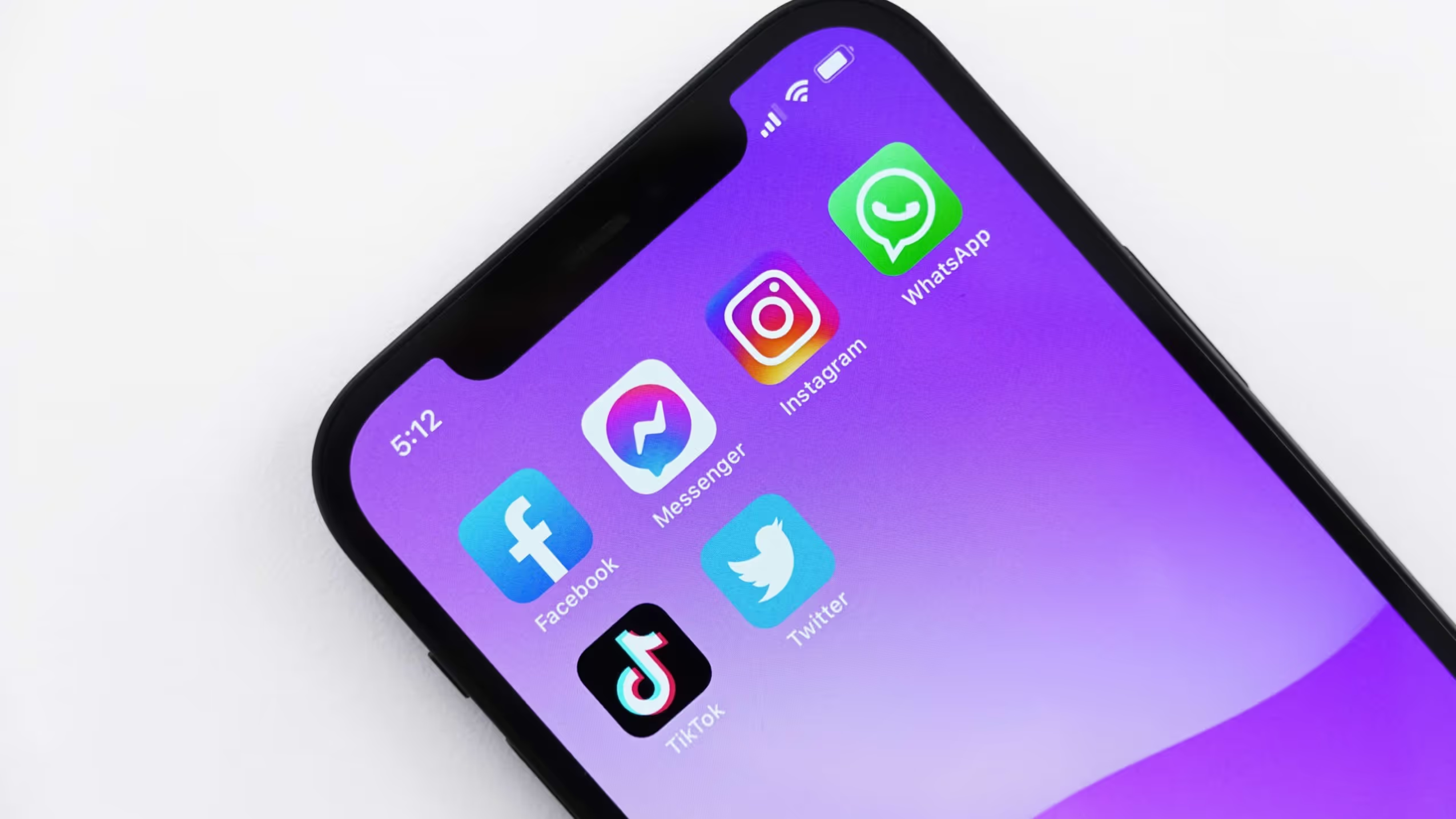
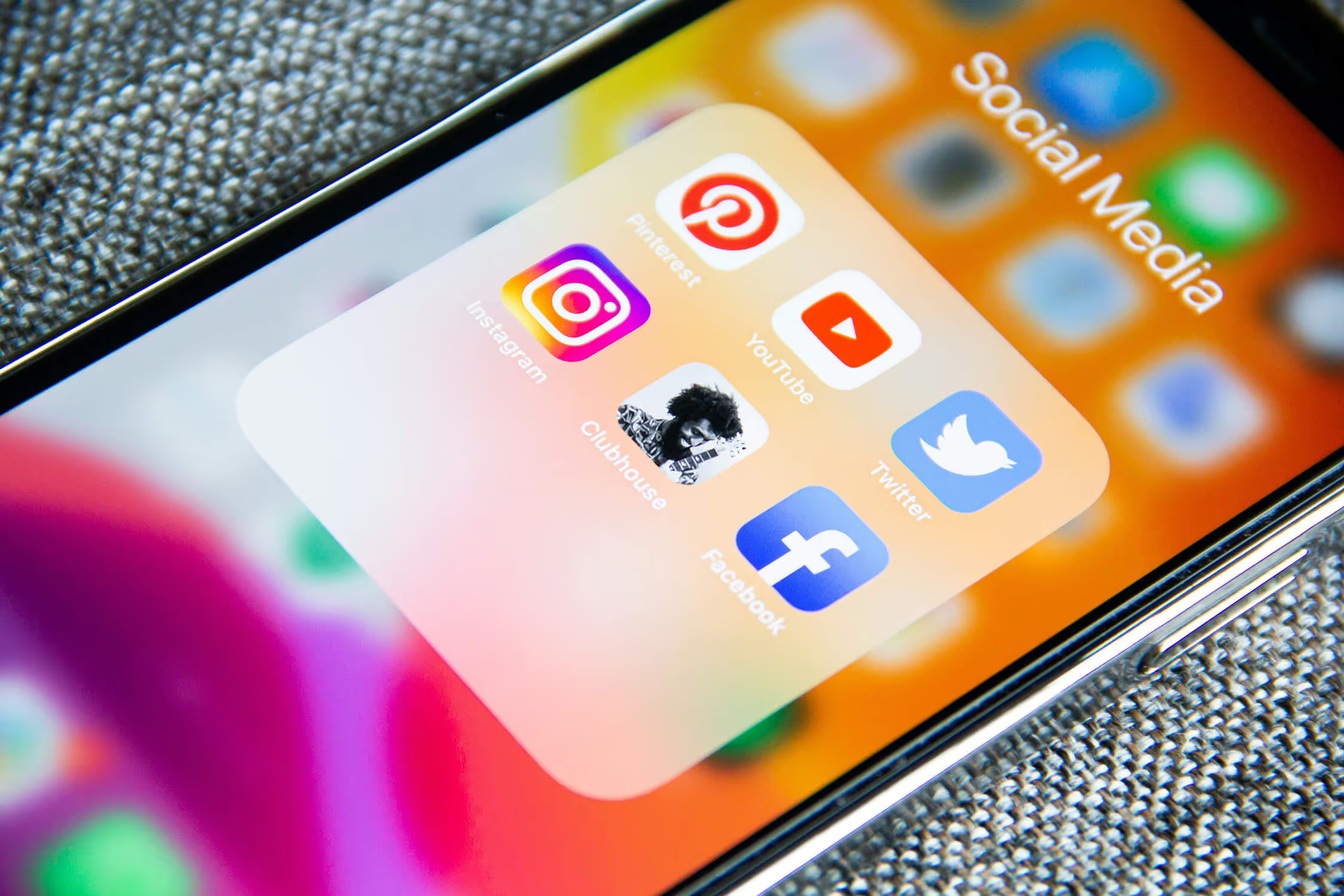
When it comes to reaching professionals and B2B decision-makers, LinkedIn is the place to be. It's built for professional networking, which means the content that works here looks nothing like what performs on Instagram or TikTok.
Text-led posts consistently outperform visual content — something you won't find on most other networks. According to Sprout Social's 2026 Social Media Content Strategy Report, just over half of LinkedIn users are most likely to engage with text-based posts, with the platform's audience gravitating towards direct, educational content and leadership perspectives over anything influencer-driven.
The numbers show why this matters for executive communications strategy. LinkedIn has 1.2 billion members, four out of five of whom drive business decisions, and its audience has twice the buying power of the average web audience.
We know the platform is powerful. But should you be more active on LinkedIn, or should you focus on getting media coverage? It sounds like a simple either/or, but LinkedIn and traditional PR aren't competing channels, nor are they interchangeable.
What LinkedIn Does Well
LinkedIn gives leaders direct access to their professional network without a journalist, editor, or PR gatekeeper in between. Write it, post it, and then it goes live.
For LinkedIn thought leadership, this directness is powerful. Nearly 70% of LinkedIn users engage with brand content at least once a week, and the platform's audience actively seeks substantive perspectives from people in their field rather than shiny brand campaigns.
LinkedIn helps:
- Build a personal brand over time through regular, visible activity
- Creates direct dialogue with peers, potential partners, and talent
- Demonstrates a consistent point of view rather than one-off expertise
What it can't do is lend third-party credibility. A LinkedIn post, no matter how well-written, is still self-published. It signals that you have something to say. It doesn't independently validate that you're worth listening to.
LinkedIn vs PR: Pros, Cons, and When to Use Each
Before deciding where to invest your executive's time and credibility, it helps to see both channels clearly.
LinkedIn: Pros
- Full control over your message, tone, and timing with no editorial filter
- Direct access to your professional network, including peers, potential partners, and talent
- Builds a consistent personal brand
- Creates ongoing two-way dialogue through comments and replies
- Low cost to produce and publish, with immediate feedback through engagement data
- Algorithm rewards consistency, meaning regular posting compounds reach over time
LinkedIn: Cons
- Self-published, so it carries no independent third-party validation
- Reach is largely limited to your existing network and their connections
- Content lifespan is short — posts typically peak within 24 to 48 hours
- Audiences can become fatigued if posting frequency outpaces content quality
- Limited ability to reach audiences with no prior awareness of you or your brand
PR: Pros
- Earned credibility, whereby a journalist or editor has independently deemed your perspective worth publishing
- Reaches entirely new audiences who have no prior relationship with your brand
- Placement in respected publications like Kompas or Bisnis Indonesia signals authority in the Indonesian market
- Media coverage has a longer shelf life. It can be cited, shared, and referenced long after publication
- Builds a credibility record that supports future pitching and speaking opportunities
- More effective for shifting perception with sceptical or unfamiliar audiences
PR: Cons
- No guarantee of coverage — editorial decisions sit outside your control
- Longer lead times from pitch to publication, particularly for print or feature placements
- Your message can be reframed, reduced, or recontextualised by the journalist
- Requires ongoing relationship-building with journalists and editors, which takes time to develop
- Results can be inconsistent, especially early in a market entry programme
At a Glance: LinkedIn vs PR
In summary, LinkedIn builds presence with people who already know you. PR builds credibility with people who don't. Used together with a clear sequencing strategy, they cover ground that neither can cover alone.
How to Do Both: A Simple Sequencing Framework
The most effective executive communications strategy deliberately combines both channels. They reinforce each other when the order is right.
Step 1: Define your executive's point of view
Before posting or pitching anything, nail the perspective your executive can credibly own — specific enough to be interesting, defensible enough to hold up under journalistic scrutiny.
Step 2: Earn the external validation first
For instance, when expanding a brand’s presence in Jakarta, pitch your executive’s perspective and expertise to relevant Indonesian business media. A well-placed op-ed in The Jakarta Post or a spokesperson feature in Bisnis Indonesia establishes credibility with audiences who don't already follow your executive.
Step 3: Amplify on LinkedIn with context
Once the media placement is live, share it on LinkedIn with a personal note — what prompted the piece, what the response has been. The media hit validates the LinkedIn post; the LinkedIn post extends the placement's lifespan.
Step 4: Repeat consistently
Executive thought leadership is a sustained programme. One article and one LinkedIn post every 3 months won’t cut it. Ensure coordinated, consistent output.
What the Market Wants From Execs
Executive communications culture varies significantly across Southeast Asia. Corporate PR programmes that ignore local nuance tend to feel tone-deaf even when the content itself is technically strong.
Humility and Community First
In many Southeast Asian markets, leaders who publicly acknowledge their team's contributions, celebrate community impact alongside commercial milestones, and speak to shared progress earn greater trust than those who lead with personal achievement. Positioning a CEO as a lone visionary can land poorly in cultures where collective success and relationship-building carry more weight than individual recognition.
Earned Media Equals Social Endorsement
Across the region, business culture places significant weight on who vouches for you. A feature in a respected publication carries implicit social endorsement — a journalist has assessed you and found your perspective credible. That's a form of introduction LinkedIn alone can't replicate, regardless of market.
Language and Local Relevance Matter
Business audiences on LinkedIn respond better to content rooted in local reality. Get your execs talking about market-specific dynamics, regulatory developments, or on-the-ground business challenges relevant to each market. Where appropriate, posting in the local language signals genuine investment in that market rather than a top-down approach.
Case Studies: LinkedIn and PR Strategy for Executives in Practice
Some of Indonesia's most recognised business leaders have built their public profiles by running LinkedIn and earned media in tandem.
Edward Tirtanata, Co-founder and CEO, Kopi Kenangan
His strategy:
- Uses LinkedIn to document Kopi Kenangan's growth journey — expansion milestones, business reflections, and regional ambitions shared directly with his professional network
- Runs that personal narrative alongside a sustained earned media presence, with profiles in The Business Times, CNBC, and regional business press covering the brand's unicorn trajectory
- LinkedIn posts often reference or link to media coverage, extending each placement's reach
Why it works:
- The LinkedIn activity gives his perspective a consistent, direct channel to peers and partners
- The earned media gives that same perspective external legitimacy with audiences who haven't yet encountered the brand
William Tanuwijaya, Co-founder, Tokopedia
His strategy:
- Uses LinkedIn to share perspectives on Indonesia's digital economy, entrepreneurship, and the responsibilities of tech leadership
- Pairs that consistent LinkedIn presence with a substantial international media profile, including representation at the World Economic Forum as a Young Global Leader
- Was among the inaugural group named to LinkedIn's Indonesia Power Profiles list (Jakarta Globe, 2017), reflecting the reach his platform activity had built over time
Why it works:
- LinkedIn sustained ongoing visibility and dialogue within Indonesia's professional ecosystem
- International earned media added the credibility layer that LinkedIn posts alone couldn't produce
- The combination positioned him as a credible voice on Indonesia's digital economy to both local and global audiences
Ng Wei Wei, CEO, UOB Malaysia
Her strategy:
- Uses LinkedIn to share perspectives on leadership, digital banking innovation, and financial services in Southeast Asia
- Posts on people development and community leadership, including UOB's Better Leader Programme, reinforcing her positioning as a purpose-driven executive
- Pairs LinkedIn activity with earned media appearances, including an interview with The Asian Banker on UOB's AI governance approach and ongoing coverage in regional financial press
Why it works:
- Her LinkedIn content connects institutional announcements to personal leadership values, making corporate updates feel human
- Earned media in financial trade publications validates her authority on AI and digital transformation to audiences outside her network
- The combination has built her profile as one of the region's more visible female banking leaders at a time when gender representation in financial services remains under scrutiny
Min-Liang Tan, Co-founder and CEO, Razer
His strategy:
- Blends product announcements with personal storytelling on LinkedIn, from new Blade laptop previews and brand collaborations to reflections on building Razer from a two-person startup to a publicly listed company
- Pairs his LinkedIn presence with op-eds in outlets like Lianhe Zaobao and appearances at Forbes CEO conferences and HSBC Global Connections events
- Publishes thought leadership directly on LinkedIn on topics like design philosophy and AI in game development
Why it works:
- His content feels genuine rather than corporate. He posts as a creator first, which resonates with both his gaming community and broader business audiences
- Earned media in business and financial press extends his profile beyond gaming to investors, partners, and policymakers
- Razer went public on the Hong Kong Stock Exchange in 2017, making Tan the youngest self-made Singaporean billionaire at the time (Wikipedia, 2025). The personal brand built across both channels has supported Razer's evolution from gaming peripherals company to global lifestyle and technology brand
The Metrics You Need
When coming up with an executive communications strategy, track these key metrics:
Building Influential PR Strategies for Executives
With most things in life, trust is earned through relationships and endorsement, but credible expertise and thought leadership aid the process.
For best results, start with a clear point of view. Earn the validation. Amplify it. Then, rinse & repeat.
Mutant's corporate PR Indonesia works with your leaders to put their voices at the forefront. Our team of former journalists and regional specialists understands that the best way to position your leadership is by strategically utilising both channels. Talk to us today to explore how we can combine LinkedIn management services and earned media to shape public opinion.
FAQ:
1. Which is more effective for executive visibility — LinkedIn or PR?
It depends on your goal. LinkedIn builds consistent visibility within your existing network. PR earns credibility with new audiences through third-party validation. Most effective PR strategies for executives use both in a coordinated way.
2. How often should an executive post on LinkedIn?
Consistency matters more than frequency. Two to three substantive posts per week consistently outperform daily posting of thin content. The algorithm rewards depth and originality.
3. How long does it take to build an executive's media profile in Indonesia?
Meaningful media presence takes time. You probably need anywhere between three to six months of consistent pitching and relationship-building before you see regular, proactive coverage. Reactive opportunities can surface faster.


.jpg)
.jpg)
%20(1).jpg)


.jpg)

.jpg)

.avif)


.avif)


.jpg)


.avif)


.jpg)