Contributor
No items found.



Audiences across Southeast Asia—and globally—have stopped responding to claims. They want proof. They want to feel something. They want to walk into a room, scroll through a feed, or attend an event and know what a brand stands for without being told. That's the heart of modern brand experience strategy: make the values visible.
The global experiential marketing services market is projected to reach USD 55.53 billion in 2026, according to Business Research Insights (2025). Meanwhile, Asia Pacific's MICE (meetings, incentives, conferences, exhibitions) sector contributed over 44% of global revenue in 2025, with Southeast Asia emerging as the fastest-growing sub-region at a 12.98% CAGR to 2030. This is a fundamental reallocation of where marketing budgets are going, and why every brand experience strategy needs to account for it.
So what does "show, don't tell" actually look like in practice? Five shifts are driving the change.
Green claims without evidence are now a liability. A 2025 Capgemini Research Institute report found 62% of consumers believe companies are engaging in greenwashing, up from roughly a third in 2023. That's a steep erosion of trust, and it's reshaping how brands need to communicate their environmental commitments.
The old playbook—brand-level slogans, "eco-friendly" badges, vague pledges—doesn't cut it anymore.
So what does "show, don't tell" look like for sustainability?
Singapore's Tourism 2040 plan, for instance, pairs venue development with audited sustainability metrics, setting a standard for how MICE destinations can demonstrate environmental credibility rather than merely claim it.
For brands across Asia Pacific, this matters because trust collapses when sustainability is communicated only as marketing. The brands earning loyalty are the ones opening up their processes (yes, even some potentially iffy ones) and letting audiences draw their own conclusions. A brand storytelling trend that rewards transparency over polish.
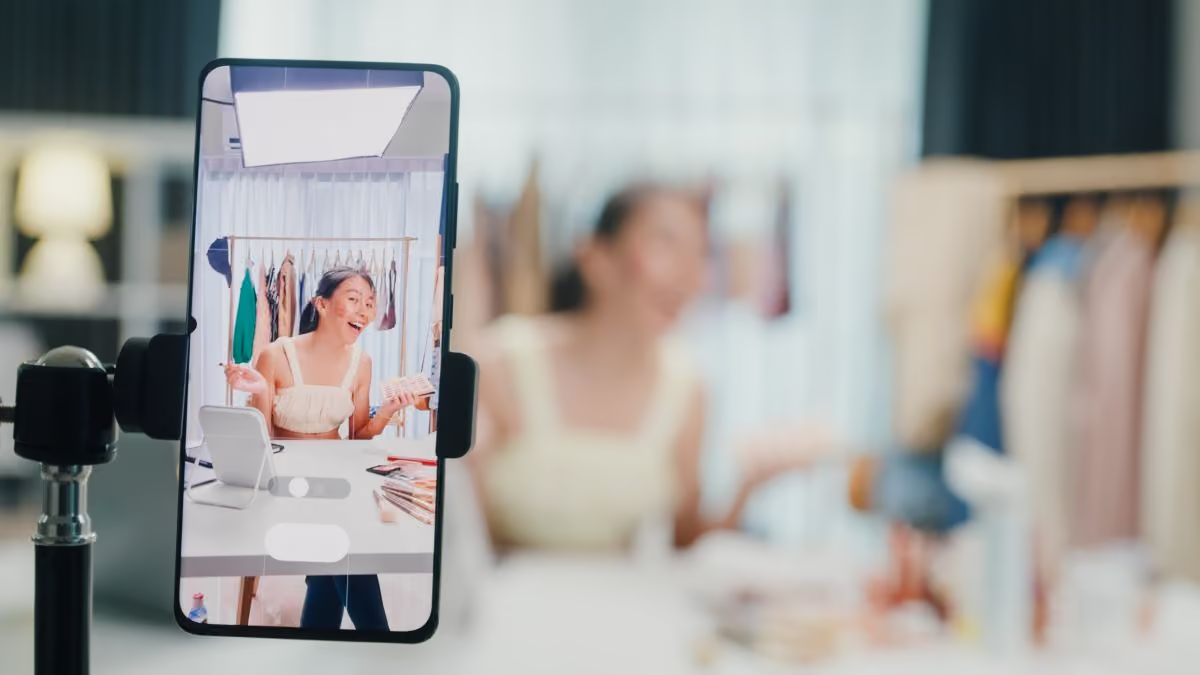
Digital fatigue is real. As we stay plugged into social media platforms, notifications, emails and endless scrolling, our brains rarely get a true pause. The pressure to stay updated, responsive and “always on” keeps us glued to our phones. And over time, that constant stimulation leads to mental exhaustion, shorter attention spans and burnout.
So, what do you do instead? Get people in the room. Major sidenote: attendees at conferences, trade shows, and brand activations no longer accept passive formats like one-directional keynotes, static booth setups with brochures collecting dust, or panel discussions that read like press releases. People want an experience.
Modular builds, personalised attendee journeys, and concierge-level service are becoming baseline requirements.
For experiential marketing in 2026, this means events need to be designed as complete ecosystems. Every touchpoint should reinforce the brand's story:
For brands operating across Southeast Asia's diverse markets, localising these experiences is what turns a corporate event into an authentic brand moment.
A branding agency in Singapore with regional reach becomes particularly valuable here. Coordinating immersive events across multiple markets, each with distinct cultural expectations, requires both strategic consistency and local fluency. That's a capability gap many in-house teams struggle to fill.
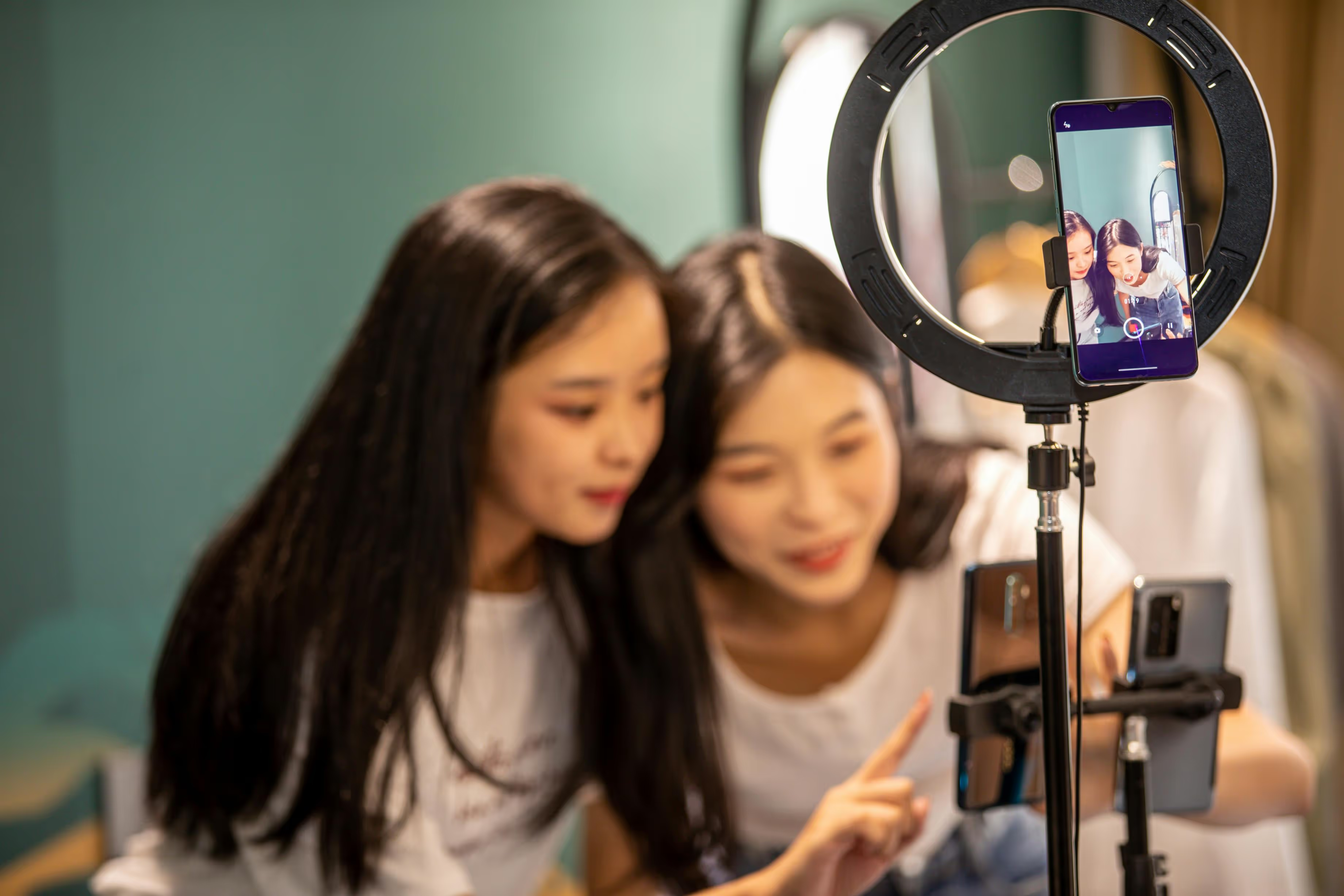
Broadcast marketing talks to people. Community-led brand experience strategy invites them in.
Personalisation at scale is simply what consumers expect. Brands that are winning trust are the ones creating spaces for genuine exchange rather than one-directional messaging. Formats that work:
Visual identity still matters, but brand design has expanded well beyond logos and colour palettes.
The most effective brand storytelling trends now span physical spaces, digital environments, event architecture, and sensory design. Design-led experiential content begins forming memories in 0.9 seconds, compared to 5 seconds for text-heavy content.
AR layers, projection mapping, and responsive LED environments—these tools are becoming central to how audiences engage with brands at events and activations.
For brands in Southeast Asia, where diverse cultural contexts demand flexible design systems, this is a strategic opportunity due to multiple touchpoints. A pop-up activation in Jakarta should feel fundamentally different from one in Bangkok or Singapore, but all three should unmistakably communicate the same brand. Achieving that balance requires design thinking that goes beyond aesthetics.
Consumers trust people over logos. That's not a new insight—but the data is now overwhelming.
The numbers speak for themselves:
*Source: https://gitnux.org/employee-advocacy-statistics/
Employee advocacy is the ultimate "show, don't tell." When your team voluntarily shares behind-the-scenes moments, celebrates milestones, or offers professional perspectives on LinkedIn, that's a brand experience audiences trust implicitly.
This means building an internal culture that's worth sharing. When employees become genuine advocates—not through forced programmes, but through authentic pride in their workplace—that becomes a brand experience in itself. One that reaches audiences that no media buy can access.
It's 2026...the possibilities of how your brand can show up are endless. If you're still doing the same stuff, it might be time for a refresh.
Audiences trust what they can see, feel, and verify. Whether that's a sustainability dashboard, an immersive event, a community forum, sensory-led design, or an employee's LinkedIn post, the brands winning attention and loyalty are the ones making their values tangible. When your brand experience is the proof, you don't need to argue the point.
Mutant helps brands develop messaging that sticks and design experiences that prove it. From employer branding in Singapore to corporate PR, our teams across five Southeast Asian markets have been shaping how regional and global brands show up for 15+ years. Curious how we'd approach experiential marketing for your brand? Talk to us today.
%20(1).avif)






.jpg)










.jpg)
.jpg)
%20(1).jpg)
.jpg)

.jpg)
.avif)

























.avif)




.avif)



.avif)


.avif)