Contributor
No items found.



The most successful hotel launches start their PR activity 12 to 18 months before opening day, building media relationships and public anticipation well ahead of the ribbon-cutting. A strong hotel pre-opening marketing plan combines storytelling, media access, influencer partnerships, and community engagement to create earned coverage that paid advertising cannot replicate. Hotels that treat the pre-opening phase as a dedicated communications campaign, rather than an afterthought, consistently achieve stronger opening occupancy and faster brand recognition. For properties launching in Thailand or across Southeast Asia, partnering with an experienced PR agency in Thailand can accelerate media traction across the region.
Opening a hotel is expensive, high-stakes, and can be an uphill task, especially if campaigns start slow. A property that launches to empty rooms and little to no media coverage faces months of hard work to build the momentum that a well-planned hotel PR campaign could have delivered. Thankfully, generating pre-opening buzz is a repeatable process. These seven hospitality PR strategies have worked for properties across price points and markets, from boutique openings in Bangkok to resort launches across the region.
Most travellers and travel trade professionals make booking decisions weeks or months in advance. If a hotel waits until opening day to begin its communications push, it misses the planning window when journalists are building editorial calendars, travel agents are curating packages, and corporate bookers are locking in accommodation blocks. A well-executed hotel pre-opening marketing plan ensures the property is on the radar before a single guest checks in.
The pre-opening period is also when a hotel's story is at its most newsworthy. Construction milestones, design reveals, chef announcements, and partnership launches all provide natural media hooks that disappear once the property becomes operational.
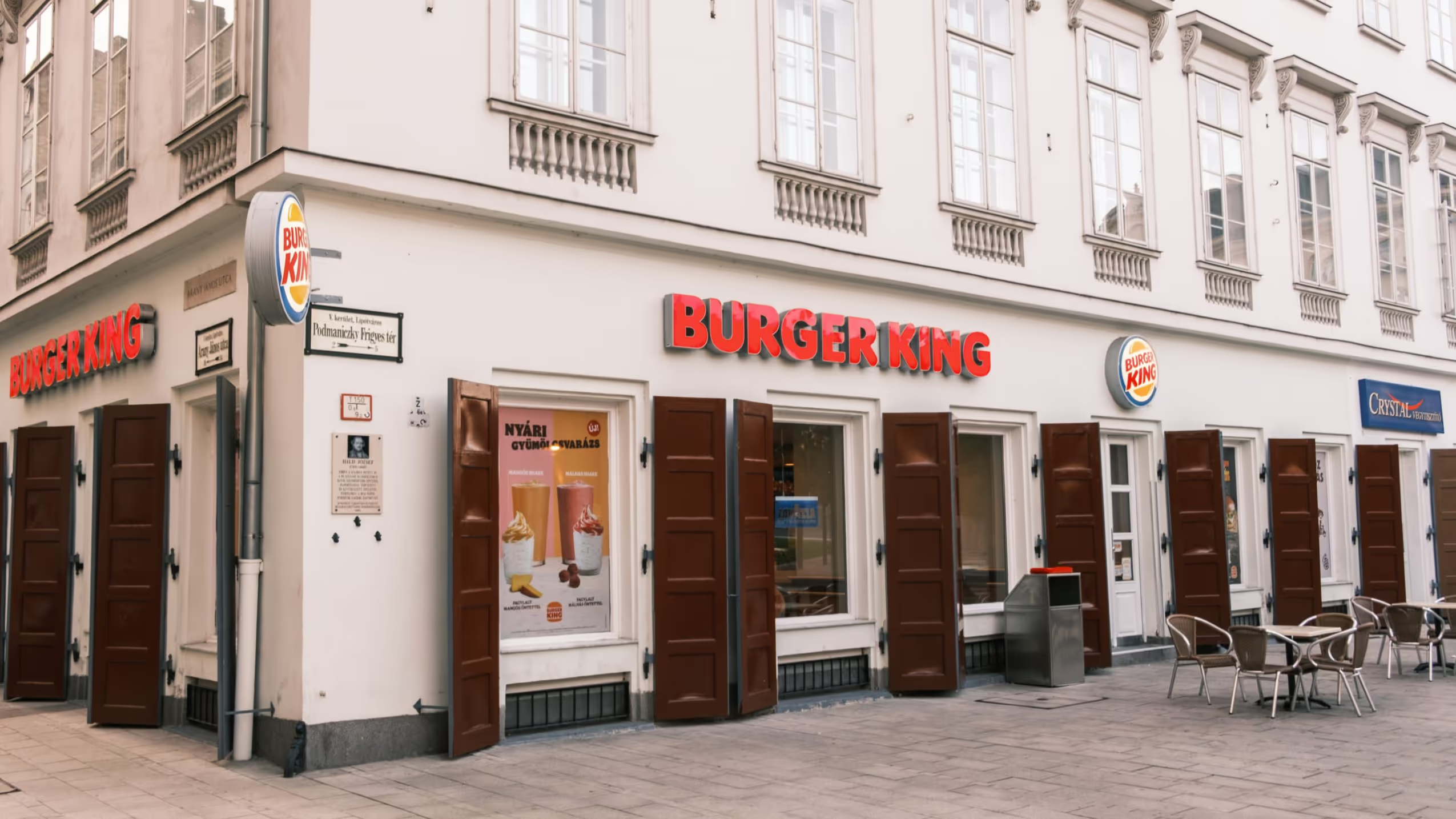
Journalists cover compelling angles, not property specifications. Before pitching, pinpoint what makes your property distinct: an iconic architect, a partnership with a renowned chef, or a sustainability commitment that goes beyond recycled towels. A sharp narrative gives media a clear reason to feature your brand in a crowded market. The Standard, Bangkok Mahanakhon, for example, built its identity around bold design and its location within one of Bangkok’s most recognisable architectural landmarks. A sharp narrative gives media a clear reason to feature your brand in a crowded market.
Long-lead publications, including travel magazines and airline in-flight titles, work six to twelve months ahead of their publication dates. A hospitality PR team should begin relationship-building with key editors and travel journalists at least a year before opening. Early outreach secures a place in editorial planning calendars that are finalised months before the property is ready for guests.
Behind-the-scenes content performs well across social media and trade press. Topping-out ceremonies, design reveal videos, time-lapse construction footage, and first-look renders give media something to cover and audiences something to follow. Each milestone is an opportunity to remind people the property is coming and to reinforce the brand narrative established in strategy one.
Invite a curated group of journalists and influencers for a one- or two-night preview stay before the official opening. This gives the media time to experience the property, produce content, and publish reviews that coincide with launch. A preview also functions as a live stress-test of service, allowing the team to identify and fix operational issues before paying guests arrive.
Hotels exist within a destination, and the smartest pre-opening campaigns reflect that. Collaborate with local restaurants, tour operators, and cultural venues to co-create opening events or packages. These partnerships generate additional media angles, build local goodwill, and create cross-promotional opportunities that extend the property's reach.
The hotel's website, social channels, and Google Business Profile should be live and active months before opening. Travellers who hear about the property through media coverage or word of mouth will search for it immediately. If they find nothing, the moment is lost. Share teaser content, countdown campaigns, and early booking incentives to convert interest into reservations during the pre-opening window.
Travel agents and online travel agencies (OTAs) need lead time to list and promote a new property. Engage key distribution partners well before launch, provide them with high-quality imagery and compelling copy, and consider exclusive early-booking rates that incentivise them to push the property from day one.
The ideal timeline is 18 months out for brand identity and strategy, 12 months for media relationship-building and long-lead pitching, six months for social media activation and trade outreach, and three months for media previews and launch event planning. Shorter timelines can compress this sequence, but the priorities stay the same: story first, media relationships second, activation third.
Track media coverage volume and quality, social media reach during the pre-opening and launch period, website traffic spikes tied to media hits, and booking conversions from PR-driven channels. Compare opening-month occupancy against the market average for new properties in the same category. A strong hotel PR programme should deliver measurable uplift against both benchmarks.
Mutant works with hospitality and tourism brands across Southeast Asia to plan and execute launch campaigns that drive coverage and bookings. With teams across five markets and deep media networks in Thailand, we know how to make a new property impossible to ignore. Want to discuss your opening strategy? Talk to us today.
A: Ideally, 12 to 18 months before the opening date. This gives the PR team enough time to develop the brand story, build relationships with journalists and travel trade partners, and secure coverage in long-lead publications that plan editorial calendars six to twelve months ahead.
A: Hotel PR focuses on earning media coverage and building credibility through third-party endorsements, journalist relationships, and strategic storytelling. Hotel marketing encompasses paid advertising, direct promotions, and revenue-driven campaigns. The most effective hotel pre-opening marketing plans integrate both, using PR to build awareness and trust while marketing converts that attention into bookings.
A: Costs vary widely depending on the property's scale, target markets, and campaign scope. A focused PR retainer for a single-property launch in one market might start from a few thousand dollars per month, while a multi-market campaign for a resort brand with FAM trips, influencer programmes, and launch events will require a significantly larger investment. The return is measured in media value, trade partnerships, and opening-period occupancy.
A: For a pre-opening campaign, an agency typically offers stronger value. Agencies bring established media relationships, regional networks, and experience managing launch timelines. Once the property is operational and generating a steady volume of news, a lean in-house communications role can manage day-to-day media relations while the agency handles larger campaigns and crisis preparedness.
%20(1).avif)




.jpg)











.jpg)
.jpg)
%20(1).jpg)
.jpg)

.jpg)

.avif)


























.avif)




.avif)


.avif)
.avif)