Contributor
No items found.



Key Takeaways
A strong influencer strategy in Thailand starts with clarity on tier, platform, and creator relationship, not with the biggest follower count. Thai audiences distinguish sharply between KOLs, KOCs, and nano-creators, and the winning brands match tiers to campaign goals rather than defaulting to celebrity partnerships. TikTok and Instagram dominate lifestyle, while Facebook and YouTube still drive commerce. Working with a specialist for influencer marketing in Thailand helps brands build sustained cultural relevance rather than one-off buzz.
Imagine you've just opened a new resort in Phuket. You invite a handful of creators for a hosted stay, expecting a wave of bookings. Instead, engagement is low and the content misses the mark.
Thailand's creator economy has matured well beyond celebrity endorsements. Today, success comes from choosing creators whose audiences, content and values align with your brand. Get it right, and every campaign builds momentum. Get it wrong, and even a generous budget may not deliver results.
Thailand has 51.0 million active social media user identities as of early 2025, according to the DataReportal Digital 2025 Thailand, with an average daily social media time of 2 hours 31 minutes. That density has produced one of Asia's most saturated creator markets, with thousands of full-time KOLs across lifestyle, beauty, food, gaming, and finance.
Despite this, brands make the mistake of underestimating audience sophistication. Thai consumers have learnt to spot sponsored posts and tend to prefer creators who show craft and consistency. That shift has raised the bar on Thai influencer marketing: relationship quality between creator and audience now matters more than reach alone.
Choosing the right tier starts with campaign objectives, not budget.
Mega influencers (1M+ followers): Best for national brand awareness moments. Actors, singers, and celebrity chefs who can push a launch into mainstream conversation. Expect high fees and lower engagement rates.
Macro influencers (100k to 1M): The workhorses of lifestyle and travel campaigns. Strong reach with more targeted audiences, ideal for hotel launches, beauty rollouts, and fashion drops.
Micro-influencers (10k to 100k): Higher engagement, more niche audiences. Best for category authority: skincare experts, coffee reviewers, wellness creators.
Nano influencers (1k to 10k): Community-level trust and highest engagement rates. Effective for local F&B, small cities, and hyper-specific communities.
The strongest campaigns often mix tiers: one macro partner to anchor the story, six to ten micro creators to build category depth, and a bench of nanos for organic amplification or hyper-local reach.
Thai marketers separate creators into two working categories. KOLs (Key Opinion Leaders) are established influencers with polished content, professional media kits, and structured campaign fees. KOCs (Key Opinion Consumers) are real users who post honest reviews, often at nano or micro tiers, and whose credibility comes from their perceived independence.
A smart KOL strategy Thailand uses both. KOLs shape the campaign narrative and reach. KOCs generate authenticity, product reviews, and the long-tail search value that turns a launch into ongoing consideration. Brands that lean too heavily on KOLs get recognition without trust. Brands that rely only on KOCs get trust without scale.
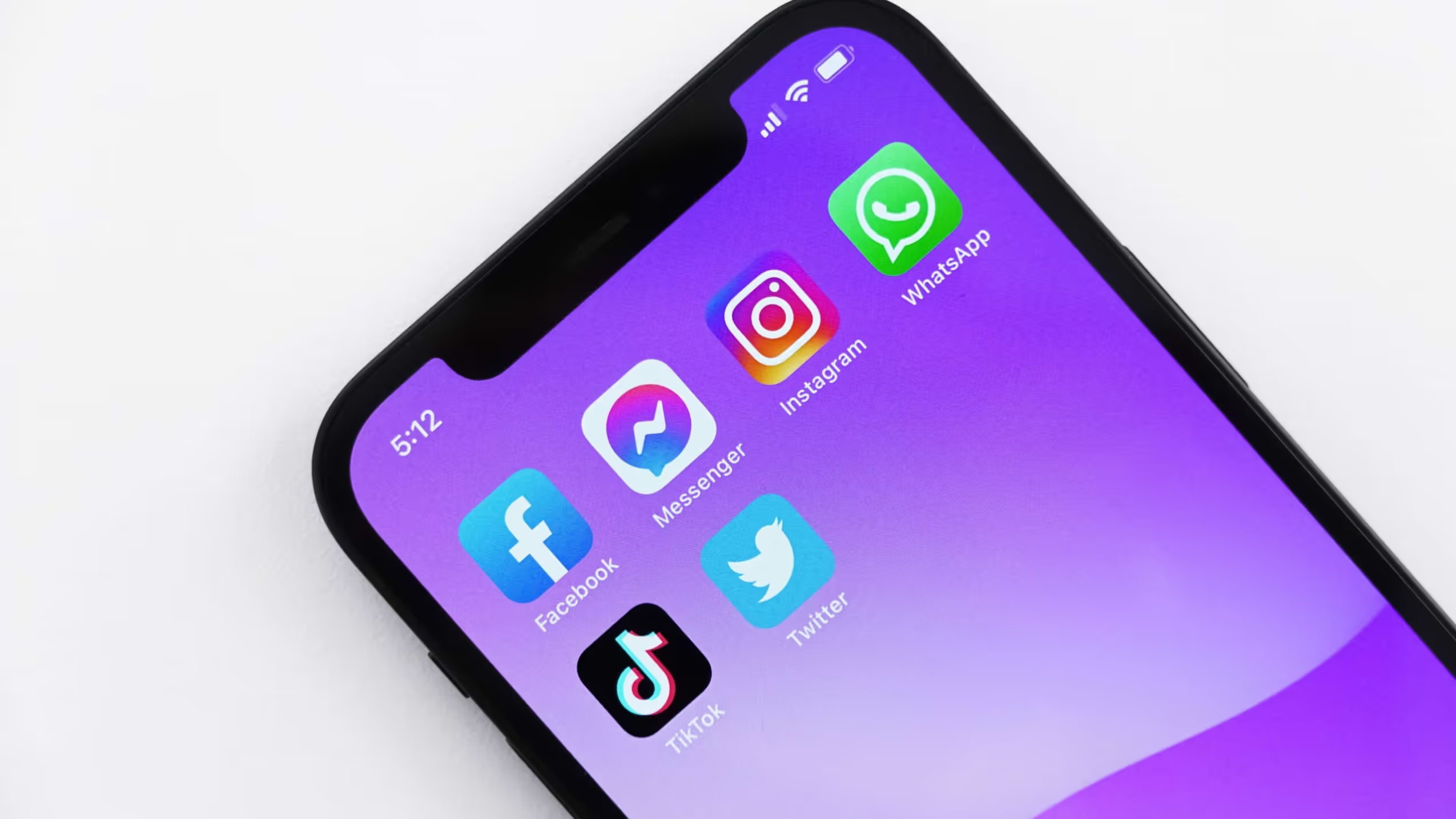
Thailand's platform mix is distinctive.
Choosing a platform by demographic and product type produces better results than trying to be everywhere.
Different brand profiles need different playbooks, even in the same market. Here are three examples to show how a considered influencer strategy in Thailand shifts with scale, category, and stage of growth.
Small budget, crowded category, urgent credibility gap. The strategy is swarm-based: many small creators, cumulative credibility, and a distribution mix that rewards founder-led storytelling.
Regulated category, high trust bar, longer purchase cycles. The strategy shifts from reach to credibility, and every creator choice needs to hold up under Thai FDA advertising review.
National reach, category leadership, brand equity to protect. The playbook runs across every tier at once, and platform choice follows product category more than demographic.
Three brand profiles, three different playbooks, one shared principle. Match the KOL strategy Thailand to your growth stage, category rules, and audience reality, and the spend pays for itself.
Follower counts have long stopped being useful on their own. The metrics that matter for influencer marketing in Thailand include engagement rate against category benchmark, view-through rate on Reels and short-form video, saved and shared content, brand mention sentiment, and conversion metrics where trackable through TikTok Shop, LINE, or dedicated landing pages.
Thai campaigns also benefit from post-campaign sentiment tracking. What did audiences say in comments? Did the creator's community defend the brand or question it? These qualitative signals shape whether the same partner is worth re-engaging.
The right influencer strategy is a system: tier mix, platform focus, creator relationships, and measurement discipline. Mutant's Bangkok team runs influencer marketing in Thailand that pairs KOL reach with KOC credibility, matched to platforms Thai audiences actually use. Want to talk through what this could look like for your brand? Get in touch.
References:
A: The strongest approach mixes tiers rather than betting on a single influencer. Pair one macro partner for reach with six to ten micro creators for category depth, add a bench of nanos for organic amplification, and choose platforms based on the product category and target demographic.
A: KOLs are established influencers with polished content and professional fees. KOCs are real users whose credibility comes from perceived independence. Thai audiences trust KOC reviews for authenticity and turn to KOLs for aspirational or lifestyle-led content. A balanced campaign uses both.
A: TikTok leads for younger lifestyle and beauty. Instagram anchors travel and fashion. Facebook remains a major commerce channel for regional brands and older audiences. YouTube performs for tutorials and gaming. LINE is essential for direct-to-consumer loyalty campaigns.
A: Look beyond followers. Track engagement rate against category benchmark, saved and shared content, sentiment in comments, and conversion metrics through TikTok Shop, LINE, or landing pages. Post-campaign qualitative signals often predict whether a partner is worth re-engaging.








.jpg)











.jpg)
.jpg)
%20(1).jpg)
.jpg)

.jpg)

.avif)
































.avif)






.jpg)






.avif)




.jpg)